Related Articles





The era of foldable smartphones has finally entered a stage where innovation meets practicality. Early models were exciting but often felt like experimental gadgets with compromises in durability, software, and price. Now, with third-generation devices such as the Samsung Galaxy Z Fold 7 and Xiaomi MIX Fold 3, foldables are stepping confidently into flagship territory. These devices combine cutting-edge hardware, refined software experiences, and designs that aim to make folding screens not just a novelty, but a genuinely useful feature for everyday life. In this article, we’ll explore how far foldables have come, examine the improvements and lingering trade-offs, and provide a verdict on whether investing in a third-generation foldable is worth it.
What “3rd Generation” Means?
The first foldables were essentially proof-of-concept devices: exotic, expensive, delicate. The second generation brought incremental improvements: stronger hinges, better materials, more refined UI adaptation. The third generation (or an equivalent “mature” stage) is defined by several key shifts:
Durability improvements: stronger hinges, better screen materials, higher fold‐cycle ratings.
Refined form factors: thinner profiles, lighter weights, better ergonomics.
Feature maturation: improved software support for large inner displays, multitasking, cover display enhancements.
Better value / real-world usability: more compelling reasons beyond novelty to choose a foldable.
We are now seeing examples that fulfill many of these goals, making it the right time to ask: are foldables ready for prime time?
What’s Improved?
Here are the major areas where foldables have notably advanced.
1. Durability & hinge technology
One of the major critiques of early foldables was fragility. The hinge, the crease, dust ingress—all those were concerns.
● Samsung claims the Galaxy Z Fold 7’s display can survive 500,000 folds, which the company equates to over 10 years of “normal use” (100 folds/day) by a test from Bureau Veritas.1
● The Galaxy Z Fold 7 uses a 50 % thicker Ultra Thin Glass (UTG) layer, a titanium plate backing the display, and a redesigned multi-rail hinge to spread stress.
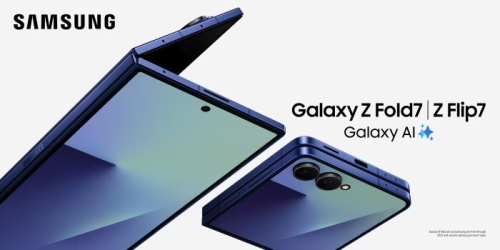
● On the Xiaomi side, the MIX Fold 3 also promises a hinge rated for ~500,000 folds and adds a “Hover Mode” hinge angle (45°-135°) for more flexible positioning.
In other words: the “will it break” question is less alarming than before. That said: real-world user-reports still reveal caveats.
2. Refined form factor: thinner, lighter, more usable
Foldable devices have long suffered for being heavy or thick compared to conventional phones.
● The Galaxy Z Fold 7 weighs only ~215 g—lighter than many earlier foldables—and has a thickness of 8.9 mm when folded, a major reduction versus older models.
● The Xiaomi MIX Fold 3 is extremely slim for a foldable: Wikipedia specs show ~5.3 mm unfolded, 10.9 mm folded.
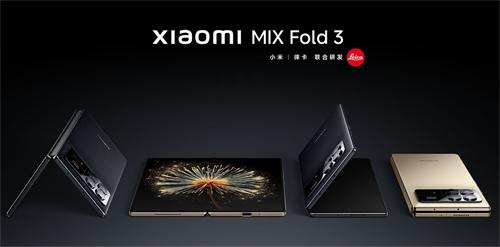
● Reviewers report that devices like the Honor Magic V3 (another mature foldable) feel much closer to “regular” phones when closed thanks to reduced thickness.
Thus, third-gen foldables are trending toward more “normal phone” feel when folded, while still delivering tablet-sized inner displays.
3. Display quality, feature support & multitasking
The big advantage of foldables is their ability to toggle between phone-mode and tablet-mode.
● The MIX Fold 3 features an 8.03″ inner LTPO OLED+ display at 120 Hz with 1 billion colours, and a 6.56″ cover display at 120 Hz.
● The Z Fold 7 offers an 8″ main display (also improving on previous generations) while maintaining high refresh and modern chipset.
● Reviewers of earlier third-gen models (e.g., the Z Fold 3) noted that only now the foldable was mature enough for early adopters because of better software multitasking, S Pen support, improved water resistance.
In short: the use case is shifting from “novelty” to “real multi-window productivity + media consumption”.
4. Better value & more compelling reasons
While still premium-priced, third-gen foldables increasingly offer features that conventional phones don’t—and are more polished than earlier foldables.
For example, reduced thickness/weight removes one of the biggest drawbacks; improved durability reduces some anxiety; the larger inner displays meaningfully add value for certain tasks (e.g., content editing, productivity, tablet-style viewing).
What Still Needs Work (Trade Offs)?
No device is perfect, and foldables still carry inherent compromises. The decision to go foldable should be made with full awareness of these trade-offs.
1. Price remains very high
Foldables are still premium flagships—and sometimes cost significantly more than their slab phone counterparts. Early adopters pay a premium for form-factor advantage.
2. Repair cost, fragility & inner screen concerns
Though durability has improved, the inner folding display remains more vulnerable.
Users report that even with the Z Fold 7’s durability improvements, the inner screen still scratches at Mohs level 2 in stress tests—so a fingernail can leave marks.
Some early users of Z Fold 7 have reported paint chipping on the hinge/side rails.
Hence: while better, foldables still require slightly more care than standard phones and likely cost more to repair.
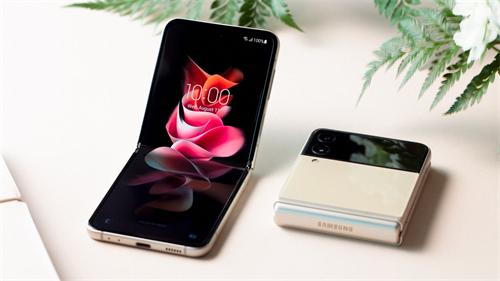
(Image from Games Radar, the copyright belongs to the original author)
3. Coverage of features vs conventional phones
Some conventional phones still lead in certain specs (camera image quality, battery life, ecosystem maturity). For foldables:
The Z Fold 7, despite its 200 MP main sensor, still gets user reports of “shutter lag”.
The Xiaomi MIX Fold 3 – as brilliant as it is – is not officially globally launched (at least at the time of writing) and may lack full band/Google service support depending on region.
The software adaptation for foldable inner display, though improved, sometimes still carries quirks (app scaling, cover display utility, crease visibility).
4. Ecosystem & accessory support
Because foldables are niche, some accessories (cases, screen protectors, repair) may be less mature, especially in non-mainstream markets. Also, the hinge introduces a mechanical element that never exists in slab phones.
Should You Buy a 3rd-Generation Foldable?
Yes—If
You value tablet-large screen usability in a form that still fits in your pocket. The inner 8″+ display is no longer gimmick—it’s genuinely useful.
You’re comfortable paying a premium, and accept some trade-offs (repair cost, potential fragility).
You’re ready to treat it as a flagship and latch on to what foldables excel at: multitasking, media, productivity, novelty with maturity.
You pick a model with strong ecosystem support (e.g., Samsung) and ensure your region support is solid.
Maybe Wait—If
You’re budget-conscious and want best value rather than “top foldable”. Regular slab phones now offer extremely strong value.
You’re in rugged/dusty/wet environments and you want max durability—foldables are improved, but still weaker than sealed slab phones.
You rely heavily on accessory availability, repair options, or are in a region with limited support.
You only occasionally use large screen size; if you mostly use phone mode and rarely unfold, the benefit may not justify the cost.
The third generation of foldables has moved the category positively forward. Where early models felt like experiments, and second-gen felt “better but still emerging,” the current crop gives a strong “yes—we’re ready” signal. If you’re drawn to the form factor, have use for it, and accept the premium, you can go ahead with confidence.
Just keep in mind: foldables are not “perfect” yet. The trade-offs still exist. But they’re now minimized enough that they become acceptable in exchange for the unique benefits.
Source:
1: https://www.androidauthority.com/samsung-galaxy-z-fold-7-display-fold-rating-3579529
References:
https://www.androidcentral.com/phones/xiaomi-mix-fold-3-launch
https://www.sammobile.com/news/samsung-galaxy-z-fold-7-breaks-new-ground-in-foldable-phone-durability
https://www.tech2geek.net/samsung-galaxy-z-fold-7-review-the-best-foldable-phone-yet-but-at-a-high-price
