Related Articles




In an age where the devices we carry in our pockets, wear on our wrists, or nestle quietly in our homes are deeply integrated with our personal and professional lives, security is no longer just a feature — it's a foundational requirement. For years, software-based protection such as antivirus programs, firewalls, and regular patching formed the backbone of digital defense. Yet as cyberattacks become more sophisticated and hardware compromises more feasible, relying solely on software is proving increasingly risky. What was once considered “good enough” now appears fragile under scrutiny.
Against this backdrop, a paradigm shift is underway: more consumer electronics are being designed with security embedded directly at the hardware level. Under this approach, protective measures are not merely installed atop the operating system — they are built into the silicon, driven by dedicated security chips or modules, and anchored by a hardware-based “root of trust.” From secure boot procedures to hardware-backed cryptographic key storage, these mechanisms promise a deeper, more persistent, and far harder-to-bypass line of defense. As a result, “always-on” hardware-level security is rapidly evolving from a niche enterprise feature into a crucial standard for everyday devices.
From Patches to Foundations: What Hardware-Level Security Does That Software Can’t
Hardware-level security fundamentally changes the threat model. Instead of relying solely on software — which can be bypassed, exploited, or rendered obsolete — hardware security builds protections directly into the physical components of a device. This means cryptographic keys, firmware verification, secure boot processes, and secure execution environments are anchored in the chip itself, making them far less vulnerable to many common and advanced forms of attack. When a device supports a module like a Trusted Platform Module (TPM), that module acts as a hardware-level vault that securely stores passwords, certificates, encryption keys, or biometric data — sensitive information that software alone might struggle to protect.

One of the core elements of hardware security is the notion of a hardware “root of trust.” This root of trust ensures that from the moment a device powers on, the system verifies that firmware and critical components haven’t been tampered with, and that only trusted, cryptographically verified code is allowed to run. This stops malware and other threats before they can even load, preventing compromised firmware or boot-loader attacks that software defenses cannot reliably catch.
In addition, hardware-level protections guard against physical attacks and side-channel threats. Chips can be designed to be tamper-resistant, to resist invasive or non-invasive physical attacks (like micro-probing, voltage manipulation, or electromagnetic fault injection), and to safeguard sensitive data even if attackers have physical access to the device. [1]
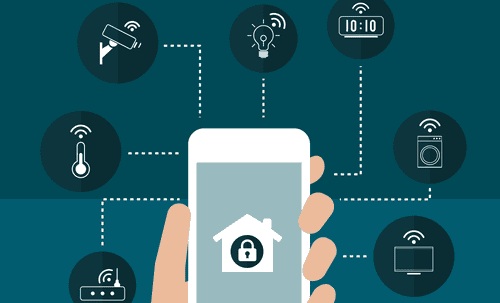
This shift is particularly important for embedded devices, IoT (Internet of Things) appliances, smart-home gadgets, and other consumer electronics that often run unattended, store sensitive data, or connect to other devices/networks. These devices are notoriously difficult to patch and monitor — but if they include hardware-level security, they become far more resilient out-of-the-box.
Why the Industry Is Racing Toward “Always-On” Hardware Security?

The move toward hardware-backed security is being driven by both security threats and practical demands. As devices proliferate — from smartphones and laptops to smart speakers, cameras, IoT sensors and beyond — the attack surface expands; vulnerabilities at the firmware or hardware level can now compromise entire ecosystems. Researchers and engineers argue that modern microelectronics must be scrutinized and engineered with security in mind throughout the lifecycle — from design and manufacturing to deployment and end-of-life — to safeguard against ever evolving attack vectors. [2]
Part of this shift involves widespread adoption of technologies such as secure enclaves or trusted execution environments (TEEs), which isolate sensitive computations (like encryption, authentication, secure storage) inside hardware-protected compartments, away from the reach of regular applications or even the operating system itself.
Many device makers are now integrating security from the start rather than as an afterthought. Instead of bolting on security patches or software protections late in the device’s lifecycle, manufacturers are embedding secure elements, cryptographic modules, and firmware-verification mechanisms directly into chips. This trend — sometimes described as “security by design” — ensures devices leave the factory hardened against both remote and physical attacks. [2]
Moreover, as regulatory and compliance pressure grows — with businesses, governments, and consumers becoming more aware of cybersecurity and data privacy — hardware-based security provides a stronger, more verifiable baseline for trust. Devices with hardware-backed security become more resilient, easier to certify, and more suitable for sensitive applications like digital payments, authentication, encrypted communications, and cloud services, where security failures can have serious consequences.

Finally, in an era of rapid hardware renewal — new generations of processors, new IoT form factors, new use cases — hardware-level security ensures that protections are long-lasting and less dependent on patch cycles, software updates, or timely maintenance. It builds security deeper into the device’s very architecture, reducing reliance on user behavior or timely updates. [3]
Consumer Electronics Evolve — and So Must Expectations
For everyday users, the shift toward hardware-level security will increasingly shape what counts as a “safe” or “trustworthy” device. We’re likely to see newer smartphones, laptops, wearables, and smart-home gadgets advertise security as a core feature — not just a line on a spec sheet after processor speed or camera resolution. Features like secure boot, hardware-encrypted storage, secure enclaves for keys/passwords, and tamper-resistant chips will become baseline expectations rather than premium add-ons.
This transformation also means that consumers should become more aware of what lies beneath the surface. Buying devices from reputable manufacturers who acknowledge hardware-level protections — secure elements, TEEs, trusted platform modules (TPMs), and secure firmware chains — could make the difference between a device that remains secure over years, and one that becomes a weak link in a larger digital ecosystem.
As the threat landscape evolves — from remote hacking to supply-chain attacks to physical tampering — “always-on” hardware security provides a sturdier foundation to protect data, identity, and privacy. In a world where what we carry and connect touches nearly every aspect of our lives — personal, financial, professional, and social — building trust from the silicon up is no longer optional.
Sources:
[1]: https://fiveable.me/advanced-computer-architecture/unit-15/hardware-based-security-features/study-guide/0G5WwqPzTOArw3WL
[2]: https://www.trustonic.com/technical-articles/leveraging-hardware-backed-security-for-consumer-electronics
[3]: https://www.amd.com/content/dam/amd/en/documents/processor-tech-docs/white-papers/the-role-of-hardware-in-a-complete-security-strategy.pdf
References:
https://www.intel.com/content/www/us/en/learn/what-is-a-trusted-platform-module.html
https://library.mosse-institute.com/articles/2023/08/hardware-root-of-trust.html
